Dress: Modesty and Fluidity {Post A}

Walking through the streets and marketplaces of Indonesia today you’ll see women clad in layers of clothing no matter what the weather. All but heads, hands and feet are covered and in respect to Muslim women, even heads are concealed.

But looking back at historical artefacts such as Prambanan Temple, and Hindi temple whose construction began in 850 AD and Borobudur Temple, a Buddhist Temple whose construction began in 750 AD (Borobudur Park 2015), we see, preserved in the walls images on bas-relief (Lee 2010), an Indonesia with very distinctive differences to todays societal interpretation of modesty in dress.

SS7730523_7730523_10419061
Bas-relief  – Prambanan Temple (Barnes 1995)

The courts of central Java conserved many aspects of ancient culture, garb being one of them (Lee 2010). In the relief pictured above, we see bare breasted women with decorative body chains and jewellery adorning their chests. Heads are covered in ornamental headdresses and their lower half is covered by only a sheer ankle length skirt and opaque fabrics belted around the pelvis. Outside the courts however, common dress changed dramatically. From the 8th – 14th centuries, during the Hindu-Buddhist era, women’s dress was largely influenced by the Indian sojourners:


“their shoulders were bare, their chests were wrapped in a continuous piece of narrow fabric, and from the waist down they wore a sarong fashioned from unsewn cloth” (Lee 2010).


However, in the 14th and 15th centuries following the introduction of Islam and in turn in the 16th century, the arrival of Christians in Indonesia, it was encouraged for women to cover the upper cover the upper half of their body, manifesting in the adoption of jackets and sleeved blouses (Lee 2010).

Indo woman 2
Jogjakartan woman preparing local desserts

Coming to the 20th century in the 1970s, in Islam, we see the rise of conservatism. Although waves of conservatism have been seen before, this is the first time this religious shift brings about a new way of dressing for women whether in strict religious communities or not (Lee 2010). As this measure gained force, even a large population of Javanese women have assumed modest Arabic dress conventions, covering their hair and the majority of their bodies (Lee 2010).
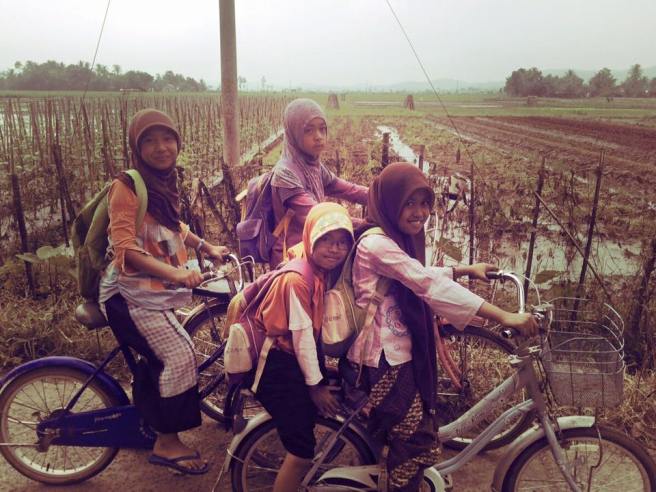
Indo girls
Local girls in Salatiga, Central Java, Indonesia, wearing the Hijab

In Indonesia in the 1990s, the first Anti-Pornography and Porno-Action Bill was drawn up (Pausacker 2008). This Bill not only criminalises pornography, but also makes illegal:


“many kinds of theatre and dance performances, art, forms of dress (such as baring the shoulders and legs) and behaviour of individuals (such as kissing on the lips in public), displaying ‘sensual parts’ of the body or ‘erotic dancing’” (Pausacker 2008).


Apprehension was conveyed by critics about the bill as there was concern that it would “impede everyday life, their regional cultural practices and their freedom of artistic expression. (Pausacker 2008)”

Since the time of the Prambanan and Borobudur Temples, there has been a complete turn around in views on modesty. From bare breasts to barely exposed hands and faces Indonesia has seen the modesty of dress from one extreme to the next.


Barnes, R. 1995, The Yale Indo-Pacific collection 002116 Reliefs at Candi Lara Jonggrang at Prambanan, ArtStor, viewed 10th April, http://library.artstor.org.ezproxy.lib.uts.edu.au/library/#3|search|6|All20Collections3A20prambanan|Filtered20Search|||type3D3626kw3Dprambanan26geoIds3D26clsIds3D26collTypes3D26id3Dall26bDate3D26eDate3D26dExact3D26prGeoId3D26origKW3D||9|

Borobudur Park 2015, Fact Sheet: Prambanan, viewed 9 April 2016, http://borobudurpark.com/fact-sheet/

Borobudur Park 2015, Fact Sheet: Borobudur, viewed 9 April 2016, http://borobudurpark.com/fact-sheet/

Lee, C. 2010 The Sarong Kebaya of Singapore, Malaysia, and Indonesia, Berg Encyclopedia of World Dress and Fashion: Volume 4 – South Asia and Southeast Asia, viewed 25th March  2016, http://www.bergfashionlibrary.com/view/bewdf/BEWDF-v4/EDch4056.xml

Pausacker, H. 2008, Hot Debates, weblog, Inside Indonesia, viewed 30th March 2016, http://www.insideindonesia.org/hot-debates

*All images, unless otherwise stated were taken by the author.

HOUSE OF LAWE: empowering women through design {Post C}

The emancipation of women has been extensively recognised as a central goal in international development, in an interview with Fitria Werdiningsih from House of Lawe, we can see just one example of how the empowerment of women through financial liberty is aiding the goal of international development.

House of Lawe is a community social enterprise based in Yogyakarta, Indonesia, that transform traditional hand-woven fabrics into functional products while aiming to contribute to the empowerment of women. All products are designed and produced in traditional Indonesian hand-woven fabrics, and sold both locally and internationally in the US and Japan. Not only are products sold for income, but House of Lawe also has a “Craft Class” initiative, which, is used as a learning centre for developing traditional hand-woven handicrafts.

While it is not a new phenomenon for women in Indonesia to contribute financially to their households, House of Lawe “aims to encourage more women to do so” (Werdiningsih, F. 2016, pers. Comm., 6 April). The workshops are aimed at “empowering women, by encouraging them to, and giving them the means to earn their own income” (Werdiningsih, F. 2016, pers. Comm., 6 April). By these processes, the women who are involved in House of Lawe, are able to contribute to their households financially, substantially improving the household nutrition and raising aspirations for their children’s education.

The conservation of traditional techniques is something that House of Lawe holds as very important to them. While they use new fabrics to create their products, they are also an environmentally conscious enterprise and aim to put measures in place to counteract their environmental impact of their products. One method in which they do this is through the craft classes they run. It is through these craft classes that they aim to teach to the participants the importance of recycling; to do this, their very first crafting module is ‘How to use leftover fabric in order to create economic value’. In this module, they use left over fabrics to make patchwork toys.

House of Lawe have two separate areas they dwell in – business and social. In terms of business, House of Lawe sources “ Lurik”, a traditional Javanese hand-woven fabric; this fabric is traditionally used only for clothing and traditional ceremonies, however, House of Lawe aim to promote the development of Lurik in order to surpass traditional uses and branch out into fashion accessories such as bags, wallets, pouches, home décor and even company merchandise. In regard to their social relationship, House of Lawe “work with local communities, sharing [their] knowledge of industry, business and handicrafts in order to elevate women. [They] share technical, marketing, and entrepreneurial skills.” (Werdiningsih, F. 2016, pers. Comm., 6 April)


House of Lawe 2015, Our Work 3, viewed 6 April 2016. http://www.houseoflawe.com/portfolio/craft-class/

House of Lawe 2015, Conserving Tradition, Empowering Women, viewed 6 April 2016, http://www.houseoflawe.com/

Indonesia-Product.com 2016, Tracing the History of Lurik Fabric, viewed 7 April 2016, http://indonesia-product.com/forum/index.php?topic=2540.0

Waste Less, Recycle More [POST B]

An adverse by-product of today’s urban and all-consuming lifestyle, solid waste presents pressing environmental consequences as we plan for the future, with the global generation of solid waste set to increase 70% by 2050, exceeding more than 6 million tonnes of waste per day (Bhada-Tata and Hoornweg, 2012).

World wide, cities are embracing tactics that target waste reduction (Masaru, 2013),  with considerable disparities in societal attitudes, behaviors and strategies towards rubbish disposable evident amongst developed and developing nations.  Geographically and politically relevant, NSW government initiative Waste Less, Recycle More (WLRM), was designed in 2013 in direct response to the immediacy and severity of issues concerned with post consumer waste in a multitude of areas, and the challenges they engender in designing for the future.

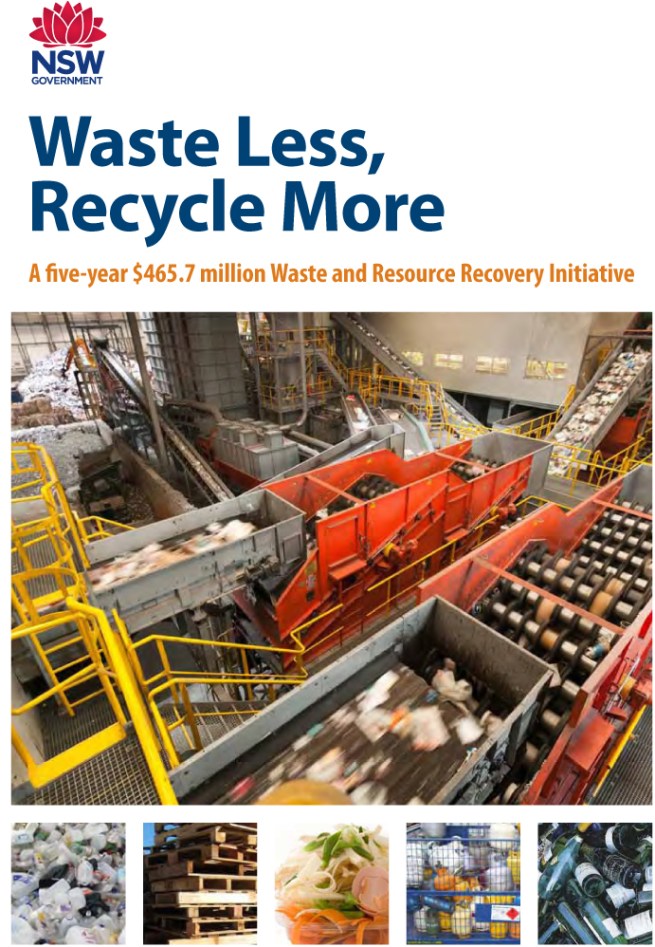
Waste less, recycle more: a 5-year $465.7 million Waste and ResoEPA, 2015.

Specifically, WLRM is a $465.7 million package that is government funded with the intent to transform waste and recycling in NSW from 2013 to 2018 (EPA, 2015).   This transformation has been orchestrated and plans to be continued to be orchestrated through the individual funding of a collective of separate ‘children’ programs, all of which fall under the WLRM scheme.  These are programs such as Love Food Hate Waste, Resource Recovery Facility Expansion and Enhancement, and Improved Systems for Household Problem Wastes.  Furthermore, WLRM has in place an education strategy designed to support the key cause (reducing waste) and the ensuing programs it oversees, a strategy whose aim and vision is to ‘optimize the use and quality of education in all WLMR programs so that they promote positive behaviour change….and improvement in the environment and community wellbeing’ (EPA, 2015).

The effectiveness of the WLRM initiative is up for debate.  It is a tiered initiative,  and  its ultimate success is exceedingly dependent on the continued support of the NSW and federal government budgets and their overseers.  The Institute for Public Policy Research (a leading UK think tank), is against such tight government control over waste management, recognising and acknowledging that government foundations are key but that social enterprise policies can be considerably more effective and engaging, further summarizing that ‘our approach to resources [and by extension the wastage they generate] should be circular’ (Rowney, 2014).  By this, biological resources, such as foods, should be reused to their full extent before being returned to the Earth’s ecosystem, and non-biological resources such as metals, should be continually reused and recycled (Rowney, 2014).

Großer Stapel alter PET-Flaschen Large stack of old plastic botPlastic Waste. (Von Euen, 2013).

Many businesses worldwide are expanding on their own versions of circular reuse. H&M offers discounts in exchange for old clothes, which are then resourced for their materials, or directly outsourced to countries and situations where clothing is needed (Chegwyn, 2014). Supermarket chains are doing their part to redefine the way consumers approach food and avoid the potential for wastage to occur through such campaigns as Australia’s The Odd Bunch (Woolworths, 2016) and France’s Inglorious Fruits & Vegetables (Intermarche, 2015),  which both sell cheaper, non-calibrated and imperfect fruits and vegetables that would otherwise be thrown away.

foodwasteFood waste, primarily from grocery stores and food processors. (Sullivan, 2012).

It is not just household businesses redefining and challenging perceptions of waste. In Cateura, Paraguay, a youth orchestra plays with instruments manufactured entirely from waste materials sourced from the rubbish landfill from around which the community has built and developed basic living infrastructure, for ‘garbage is not garbage. If you have creative ideas you can do anything with it’ (CBN, 2015).

ORCHESTRAManufacturing.  (CBN, 2015).

The WLRM initiative is well supported, well documented and to date has been well received.  Its overarching success however, has yet to be concluded, and full judgement  and analysis of data can only be ascertained at the conclusion of the 5 year implementation.  It is refreshing however, to bear witness to alternative waste management schemes both large and small, with funding and a lack there of,  that unanimously agree on the detrimental effects that human waste disposal has on the multiplex layers of society and the environment, and that action is needed.  Not tomorrow, not today, but yesterday.  

References:

Bhada-Tata, P. Hoornweg, D. 2012. What a Waste: A Global Review of Solid Waste Management. The World Bank.  Accessed 25/03/2016. Available at: http://siteresources.worldbank.org/INTURBANDEVELOPMENT/Resources/336387-1334852610766/What_a_Waste2012_Final.pdf

CBN News.  2015.  ‘Recycled Orchestra’ Turns Trash into Music. CBN News Corporation. Accessed 26/03/2016.  Available at: http://www1.cbn.com/cbnnews/world/2015/April/Recycled-Orchestra-Turns-Trash-in-Music

Chegwyn, Emma. 2014. A Fashion Paradox. Thesis major work.  University of Technology, Sydney, Australia

Environment Protection Authority (EPA). 2015. Waste Less Recycle More Initiative. NSW EPA. Accessed 25/03/2016.  Available at: http://www.epa.nsw.gov.au/wastestrategy/waste-less-recycle-more.htm

Intermarche. 2015. Inglorious Fruits & Vegetables. Intermarche. Accessed 26/03/2016. Available at: http://itm.marcelww.com/inglorious/

Masaru, G. 2013. Global Waste on Pace to Triple by 2100.  The World Bank. Accessed  25/03/2016. Available at: http://www.worldbank.org/en/news/feature/2013/10/30/global-waste-on-pace-to-triple

Rowney, M. 2014. The wasteline: Redefining ‘waste’ and improving resource management policy.The Institute for Public Policy Research.  Accessed 25/03/2016. Available at: http://www.ippr.org/read/the-wasteline-redefining-waste-and-improving-resource-management-policy#


Sullivan, D. 2012. New Jersey Composter Taps Food Waste Opportunities. Bio Cycle: The organics recycling authority. Accessed 26/03/2016. Available at: https://www.biocycle.net/2012/02/27/new-jersey-composter-taps-food-waste-opportunities/

Von Euen, N. 2013. Plastic Waste. Global Waste. Accessed 26/03/2016. Available at: http://www.global-waste.de/plastic.html

Woolworths.  2016. The Odd Bunch.  Woolworths, Australia.  Accessed 25/03/2016. Available at: https://www.woolworths.com.au/Shop/Discover/our-brands/the-odd-bunch


Kartono Philosophy: Interview – POST C

During my time in Central Java I had the opportunity to meet with Singgih Kartono, a local product designer whose design philosophy aimed to inspire the locals, who lived in villages, a sense of pride in what they can produce from their village. He also aims to encourage those who have been educated to a tertiary level, to not move out of the country but rather develop their own brands and work through the villages they grew up in. These philosophies and his selfless nature inspired me to find out more about him and his background that led him to becoming the designer he is, and where he sees himself and his brands in the future.

I had a chance to interview Kartono during the festival Matai Air. We sat by one of the stalls and I spoke with him about his early design experiences as well as other aspects of his design work.

From my initial questions I found that he has been working on many of the products he creates for a long time. The wooden radio project, that he is best known for, is a development of what he did as his major design project in 1992 during his university education in design arts. He elaborated on how he designs using natural materials that are local to him, such as bamboo wood, with the exception of the internal electronic parts to his products which he sources from Panasonic.

It was soon after his university education that he was encouraged by his friends to pursue a career in designing hand crafted wooden products that were not just beautiful decorative pieces but highly reliable and functional products.  After 11 years of working for a toy design company designing wooden toys he left to start his own brand Magno.

Kartono likes to mix hand crafts and art into his design as he sees these two as being a part of each other. This way of thinking is a clear relation to design philosophies in the context of Central Java which is explored further in the earlier post “Context Defining Design”.

In the future, Kartono would like to develop a new ‘daily life’ product brand targeting people and students with products they use in their day to day life. This will aim to shift ideas that the village is a trap, to rather inspiring a realisation that the village can be a beneficial part of their lives when they aim to reach successful futures.


References:

Notes from Interview with Singgih Kartono, 21/2/16

Living in Indonesia, 1997-2016, Practical Information for Expats Living in Indonesia, Jakarta, Last viewed 20/3/16, <http://www.expat.or.id/info/info.html&gt;

Singgih Kartono, 2016, Origin of the Wooden Radio, Wooden-Radio, Indonesia, Last viewed 20/3/16, <http://www.wooden-radio.com/gb/wooden-radio-herkunft.php&gt;

ibark, 2015, Magno Designs, Australia, Last viewed 20/3/16, <http://ibark.com.au/magno-designs&gt;


The LEED Initiative:  Making Better Buildings as our Legacy – POST B

LEED (Leadership in Energy and Environmental Design) is a green building rating system that has originated in the US and spread around the globe.  LEED is the most widely used program for green rating systems in the world accounting for 175 000 meters squared of construction space certification every day. LEED aims to benefit a triple bottom line through its rating system, benefiting people, the planet and profits.

leed_logo

The core issue that LEED aims to address is the consumption of natural resources, specifically Water consumption, electricity consumption and the emission of carbon dioxide gas from the built human environment. This is a major issue facing our developing world as we start to see the effects of climate change on the earth. In the US, buildings account for 38% of all CO2 emissions, consume 13.6% of all portable water and consume 73% of all electricity consumption. LEED has identified these statistics as representing a large issue that we face and aim to reduce the impacts that the built environment has on the wider world.

The projects LEED is involved with are responsible for diverting over 80 million tons of land fill waste since they were established. Compared to the average commercial building, the LEED Gold rank of buildings consume 25% less energy and generate 35% less CO2 emissions.

pushing-industry-further

The LEED Initiative is funded by the US Green Building Council and is spread across over 150 countries and territories. They have been involved with over 72000 projects covering over 1.3 Billion meters squared. LEED collaborates with environmental scientists, construction and built environment professionals from around the globe making it a highly multidisciplinary initiative.

certification-options

Since LEED started in 1994 it has broadened its scope of projects moving from just commercial buildings rating to interior design, construction, building operations, maintenance, neighbourhood development and personal homes. With these expanded projects came multiple certificates of approval from the LEED rating system. Specific certifications for each type of building ranged from certified, to silver, gold and then Platinum depending on the points earned by the building on the rating system which measured the power consumption, water consumption and CO2 emissions as well as any features of the building that gave back to the environment such as solar generators, gardens and water recycling systems.

fees-and-deadlines.png

References:

U.S. Green Building Council, 2016, This is LEED, USA, Last viewed 20/3/16, <http://leed.usgbc.org/leed.html>

U.S. Green Building Council, 2016, Better Buildings are our Legacy, USA, Last viewed 20/3/2016, <http://www.usgbc.org/leed>

Wikipedia, 2016, Leadership in Energy and Environmental Design, Last viewed 20/3/16, <https://en.wikipedia.org/wiki/Leadership_in_Energy_and_Environmental_Design>

Post B: The race between destruction and innovation

Humans have been responsible for changing conditions of the planet, in particular with waste disposal. Art and design discourses are increasingly exploring how interdisciplinary work can reinterpret how we can deal with the challenge of waste. The question is, which will surpass the other, innovation or global destruction.

In addition to waste disposal the world is facing serious natural resource and environmental challenges, consisting of fresh water depletion, deforestation and air and water pollution. Furthermore, the struggle to feed our continuously growing population exacerbates these challenges.

According to the Food and Agriculture Organization of the United Nations, it is estimated that by 2050, the demand for fresh water will rise by 50%, the demand for food will rise by over 70% and the demand for energy will nearly double. All of these factors need to be taken into consideration whilst trying to tackle waste disposal. The ultimate solution is innovation. Designers have actively created inventions using science and technology in response to the constant challenge of waste disposal. Fundamentally, environmentalist, Ramez Naam believes it is a race between the depletion and pollution of natural resources on one side and the race of innovation on the other.

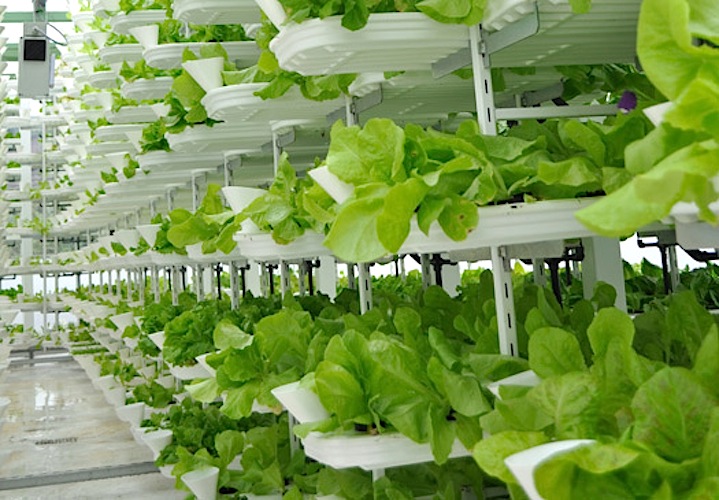
Here is where designers have coupled their design expertise with advanced 21st century technology to produce innovations in response to challenges that are threatening to permanently change our earth. Designer Dickson Despommier, acknowledged the fact that by 2050 there will be over 3 billion more people to feed, however over 80% of land that can be used for farming in the world, already has been used. His solution: create farms in skyscrapers in our cities, Vertical Farms. Grown all year-round, using solar-powered lighting and naturally recycled water and waste, different crops would be grown on each level in any geographical location.

Vertical Farm growth

Vertical Farm Systems states that the technology was developed to improve global food security, which is under threat from a decreasing availability of fertile land, water resources, skilled farm labour and unpredictable climatic conditions. After years of development and commercial testing Vertical Farm Systems are beginning to emerge throughout the world, the Plantgon: A farm with multi-level growing systems for the year-round commercial production of leafy green crops and herbs. Ultimately with minimal inputs of water, labour or land area.

Vertical Farm: Plantagon

Although designers like Despommier strive to decrease waste disposal, unless the pace of innovation is increased, the race between destruction and creation will be lost.

References:

  1. 2014, ‘The Limits of the Earth, Part 1: Problems | Guest Blog, Scientific American Blog Network.’ Web blog post.Scientific American Global RSS. Scientific American <http://blogs.scientificamerican.com/guest-blog/2013/04/17/the-limits-of-the-earth-part-1-problems
  2. 2014, FAO: How to Feed the World in 2050. Food and Agriculture Organisation of the United Nation, <http://www.fao.org/fileadmin/templates/wsfs/docs/expert_paper/How_to_Feed_the_World_in_2050.pdf
  3. Rameez, N. 2013,The Infinite Resource: The Power of Ideas on a Finite Planet. University of New England, Hanover
  4. Image 1 Reference: http://firstwefeast.com/eat/new-school-farms-are-growing-upwards-not-outwards/ viewed 23rd April, 201
  5. Image 2 Reference: http://inhabitat.com/plantagon/wp-content/blogs.dir/1/files/plantagon-ed001.jpg viewed 23rd April, 2015

Hello Indonesia Global Design Studio!

Smile Stool by Studio Hindia via Inhabitat

Image: Smile Stool by Studio Hindia via Inhabitat

Welcome to the Indonesia Global Design Studio! Here, we are creating a collaborative online space to share our individual and group research findings and reflections before and during our design studio subject in Java, Indonesia. We are students from the Design Faculty of the University of Technology Sydney, (UTS) and we will be collaborating with students from the Universitas Multimedia Nusantara (UMN).