Post D: Batik’s Battle against Modernisation

Usually when we think of traditional Indonesian fashion, we think of colour…and lots of it. With over 300 ethnic groups present in Indonesia, each one has their own regional costume that is unique to them. However, due to the pressures of fast modernization, are the ancient methods of textile production such as balik being lost?

Batik is the oldest form of textile decoration present in Indonesia, which uses a dyeing process where “melted wax is applied on the cloth with a special pen called ‘canting” (Haake 1989). This would reserve the white areas of the cloth, which is then removed post boiling. Thus, the repetition of this technique would lead to beautiful patterns and vibrant colours.

The batik is very significant in Indonesian culture and history, where it has both a local and international role. Locally, batik is a representation of their identity and cultural heritage, which is used in a range of different areas including religious and ceremonial rituals, to more domestic areas such as indoor furnishings and decorations. Internationally, Evi Steelyana W believes that, “The role of batik in international diplomacy…gives significant meaning for batik as a commodity which preserve Indonesian culture.” (Steelyana W 2012) Teruo Sekimoto also supports this notion, as “In the fields of textiles and fashion design, batik has an international reputation” (Sekimoto 2003)


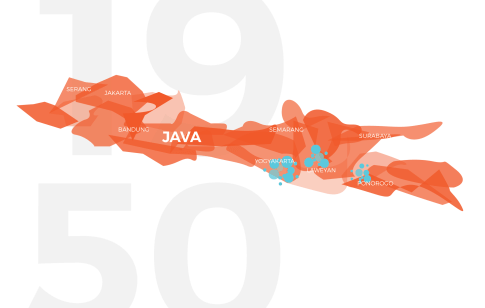
However, in contemporary society, traditional Batik production is now facing the influence of rapid globalization of Indonesia. Especially in Java, “batik making is deeply rooted in the history of Java and Indonesia” (Sekimoto 2003) There is now a dichotomy between economic and cultural practices of this technique which has been increasingly modernized due to foreign European and Asian influences, including the imports of different cotton, chemical dyes replacing traditional dyes as well a decline of skilled batik artisans and shortage of buying power (Hitchcock & Nuryanti 2016) As such, the batik industry has suffered a huge blow, namely due to the screen printing industry, which does not involve the traditional wax-resistant dye. Although this didn’t have much influence at first, the print industry developed so rapidly that it was difficult to decipher the difference between a printed batik and a wax-dyed one. Traditional batik makers also took a toll from huge mass production firms. Thus, Sekimoto believes that “the golden age of batik lies in ancient times and every change the modern era has brought to batik has been negative: modernity always means the decay of tradition” yet ironically, it is due to this decay that we have developed such a traditionalist view to it. After all, it seems that modernity has allowed batik making to survive into a “modern industry representing Indonesian tradition” (Sekimoto 2003) without being completely lost in its battle against globalization.
mapping-02
Presence of traditional batik artisans in 1950 on the island of Java (Jin, M. 2017)
mapping1-01
Presence of traditional batik artisans in 1980 on the island of Java (Jin, M. 2017)


References:

  • Cohn, F. L. 2014, Traditional ‘canting’ technique, From Bali to Bala, viewed 7 December 2017 <http://frombalitobala.com/art-work/traditional-batik/>
  • Expat Web Site Association Jakarta. 2017, Batik, the Traditional Fabric of Indonesia, viewed 7 December 2017, <http://www.expat.or.id/info/batik.html>.
  • Haake, A. 1989, ‘The role of symmetry in Javanese batik patterns‘, Computers & Mathematics with Applications, vol. 17, no. 4-6, pp. 815-826.
  • Hitchcock, M & Nuryanti, W. 2016, Building on Batik: The Globalization of a Craft Community, Routledge, UK.
  • Oxford Business Group. 2017, Modern role for Batik in Indonesia, viewed 7 December 2017, <https://oxfordbusinessgroup.com/overview/modern-role-batik-indonesia>.
  • Sekimoto, T. 2003, ‘Batik as a Commodity and a Cultural Object’ in Yamashita, S & Seymour Eades, J (ed.), Globalization in Southeast Asia: Local, National, and Transnational Perspectives, Berghahn Books, United States.
  • Steelyana W, Evi. 2012, ‘Batik, a Beautiful Cultural Heritage that Preserve Culture and Support Economic Development in Indonesia’, Binus Business Review, vol. 3, no.1, pp. 116.
  • Strand of Silk. n.d, Screen printed batik, Strand of Silk, viewed 7 December 2017 <https://strandofsilk.com/journey-map/batik/production-technique>.

Post D: The Lanting House

By Catherine Nguyen

DSCN6917.jpg

Lanting houses in Banjarmasin (Bromo, P. 2013)

I’ve travelled to quite a few places throughout my lifetime thus far, however none have come close to the sound of Indonesia. Spread across thousands of islands consist of hundreds of cities, and despite that these neighbourhoods share the same umbrella name, they all have different needs, lifestyles and identities. When combined, they form the culturally rich, beautiful and lively country that is Indonesia.

Whilst the phenomenon of globalisation has proved us certain advantages especially in terms of travel, for places like Indonesia where their identities are defined heavily upon culture, it becomes a battle between modernisation and protecting celebrated traditions.

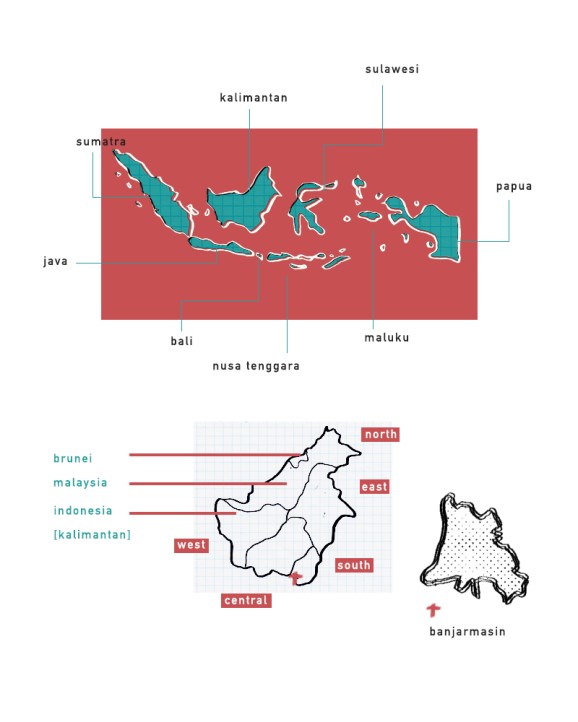
Banjarmasin, located south of Kalimantan, Indonesia, is a self proclaimed ‘City Of A Thousand Rivers’. The name is well earnt, considering the city has been developed on a delta with a total of 107 rivers, creeks and canals (Kusliansjah et al. 2016). Boasting also a ‘unique architectural heritage, natural splendour and colourful floating markets’ (Chandra, S. 2016), I was intrigued to learn about its historical development as well as the lifestyle of this Banjarnese community that I was envious of.

mapping indonesia

Mapping Indonesia (Nguyen, C. 2017)

To my (un)surprise however, countless articles surfaced to address this physical, economic and environmental transformation the city was currently undergoing, due to the increasingly urbanised and globalised culture (Lamarca, M. 2012). From a city that proudly flaunted their homes which were structurally designed  to be harmonious with nature, they are now facing an identity crisis as they move from the waters onto land.

lanting.jpg

Presence of lanting houses in present Banjarmasin (Nguyen, C. 2017)

Of the 11 types of homes traditionally known in Banjarmasin, the Lanting house is the only one to be constructed on water. Once an ‘expression of Banjarnese culture’ (Dahliani et al. 2015) and definitive of the city’s way of life, it now ceases to exist- instead replaced with the growing preference for urban architecture as influenced by global trends. Historially built along the riverbanks of Matarpura, Kuin and Alalak they were used as both floating homes and stores- a fundamental aspect to the Banjarnese lifestyle (Kusliansjah et al. 2016). Progressively, with road developments and a growth in land-based settlements, its presence begun to cease. As of 2015, it was recorded that there were only 10 lanting houses left (Dahliani et al. 2015).

Contrastingly to land-based cities where the identities of their urban architecture and local culture are much more definitive and stabilised, tidal waterfront cities such as Banjarmasin are continuously facing uncertainty regarding their infrastructure, and constantly fear the loss of their identity and image as the tidal city.

The traditional lifestyle has not been entirely disregarded yet; there are still river markets floating around Banjarmasin and kelotoks* available for transportation- just targeted towards the tourists more than the locals. But how long will it be until everything becomes complete history?

2295633999_d0ff62630e_o.jpg
(Basymeleh, I. 2008, Traditional floating market at the river in Banjarmasin)


*Kelotok = Indonesian wooden boats

References 

Basymeleh, I. 2008, Traditional floating market at the river in Banjarmasin, photograph, Flickr, viewed December 2 2017, <https://www.flickr.com/photos/ismailbasymeleh/>.

Bromo, P. 2013, ‘NEGERI DI ATAS AIR’, Have A Cup Of Tea!, weblog, viewed December 2 2017, <http://nfitriah.blogspot.com.au/2013/09/negeri-di-atas-air.html>.

Chandra, S. 2016, Banjarmasin, Garuda Indonesia Colours, viewed December 1 2017, <http://colours-indonesia.com/en/travel/travel-indonesia/banjarmasin/>.

Dahliani, Muhammad F. & Hayati A. 2015, ‘Changes of architecture expressions on Lanting House based on activity system on the river’, History Research, vol. 3, no. 1, pp. 1-8.

Kusliansjah, K., Siahaan, U. & Tobing, R. 2016, ‘Reinterpretation of Architectural Identity in a Tidal Waterfront City’, International Journal of Architecture and Urban Development, vol. 6, no. 1, pp. 33-40.

Lamarca, M. 2012, Participatory Waterfront Design in Banjarmasin, polis, viewed December 1 2017, <http://www.thepolisblog.org/2012/04/participatory-waterfront-design-in.html>.

Michiani, M. & Asano, J. 2017, ‘A Study on the Historical Transformation of Physical Feature and Room Layout of Banjarese House in the Context of Preservation’, Urban and Regional Planning Review, vol. 4, pp. 71-89.

Post A: Design in Context

useme
Context is everything when understanding and solving problems

The scope and influence of Design is seemingly endless and it plays some role in almost every industry, society, and culture today. Design determines the systems, technologies and structures we live by and as these evolve and shift, as does the role and practice of the designer. Human-Centered design researcher Gozde Goncu-Berk explained, “In the last decade, graphic design has gone from being defined largely by style to something that is influenced and can influence international policy, consumption, education and the environment (Drucker and McVarish, 2009).” This limitless flexibility is what makes context a key element in every design problem and solution.

Graduating designers are no longer simply experts in the elements and principles of graphic design, products, architecture or fashion, but equally important is their understanding and approach to the many complex contexts they may need to engage and collaborate with.  Assistant professor of art and design at the University of Wisconsin Milwaukeein, Adream Blair-Early, reinstated this when she explained, ‘New designers are valued as much for their ability to collaborate, innovate and creatively solve problems as they are for their understanding of typography and layout.’

Designers frequently must take into consideration shifting environmental, economic and  technological contexts, but with ever-growing globalisation, one of the most challenging tasks for designers today is working across a diversity of cultures. Without undergoing extensive and immersive research, understanding the needs and sensitivities of a foreign culture can be very problematic. Gozde Goncu-Berk highlighted these difficulties when she said, “Designing for another culture is less intuitive and vulnerable to assumptive thinking; therefore cross-cultural design requires constant validation of design decisions with the users. Designers need to be aware of their biases and assumptions as much as possible to draw insights from the user’s reality.”

For example, the culture of a country such as Indonesia is significantly different to Australia in many ways. Therefore an Australian designer must take time to understand the religious, social and political climate of the country before embarking on any kind of user-centered design. Without gaining this information, the designer cannot assume they know how the locals would interpret, receive, understand or interact with their design.

Throughout their practice designer’s must develop skills in innovation and creativity. These invaluable tools, when implemented in a way that is harmoniously integrated with the given contexts, have the power to significantly reshape and improve global society.

References.

Gonku Berk. G, 2013.’A Framework for Designing in Cross-Cultural Contexts: Culture-Centered Design Process,’ PhD Thesis, University of Minnesota, viewed 18 February 2017, <http://search.proquest.com.ezproxy.lib.uts.edu.au/arts/docview/1429798745/fulltextPDF/ADB579FC5323499CPQ/1?accountid=17095&gt;

Blair-Early, A. 2010, ‘Beyond borders: Participatory design research and the changing role of design,’ Visible Language, Vol.44 ,No.2 ,Pp.207-218.

Xiang, X. 2007, ‘Product innovation in a cultural context: A method applied to Chinese product development,’ Dissertation Abstracts International, Vol.68, No.03, Pp.73-77.

Image

Ahlefeldt, F. ‘It’s not that deep,’ viewed 19 February 2017, <http://www.shakiarenee.net/enough-is-enough/&gt;

Post A – The Rise of Muslim Fashion

Islam is the fastest growing religion in the world and the majority of its population reside in Indonesia. However, in Indonesia, it is merely more than just a religion. Islam has transformed into a popular brand for media, cultural and commercial products (Gur, 2016).

Over time, the significance of Islamic culture has increased, becoming a widespread influence amongst women in Indonesia, who have chosen to adopt the religious headscarf, otherwise known as the hijab. This propagation of Islamic dress, is the result of a connection of political, economic, and cultural changes among the women of Indonesia (Jones, 2007). Currently, about 10 percent of the female population wear the hijab, which some in the West view as an act of oppression. However, women around the world, view the hijab as a tool of empowerment, defining a woman’s presence with power and style (The Jakarta Globe, 2013).

511404232
Fashion designers Odette Steele, Dian Pelangi and Nelly Rose on the runway during London Fashion Week 2016. Photograph: Eamonn McCornmack

Indonesians feature a more dynamic and colourful response to the hijab, while at the same representing its unassertive values. “We interpret modesty in more moderate terms without compromising the head-to-toe coverage” says fashion designer Dian Pelangi, who is known as the pioneer of Muslim fashion in Indonesia. Where the media often overlooks or misinterprets Islam, frequently portraying it alongside acts of terrorism and fundamentalism, fashion designers like Dian Pelangi, travel around the world in hope to promote Islam and Muslim fashion to a broader perspective. Similarly, fashion photographer, Langston Hues, has compiled a book titled Modest Street Fashion, which explores the views and opinions on Muslim fashion trends and their evolution, through a diversity of Muslim women worldwide. “People dress on the basis of their environment and the values they uphold,” he says, “the breed of modest fashion bloggers is fairly new but ever evolving.” (Langston, 2014).

11949314_10153061688655913_5529945341248698346_n
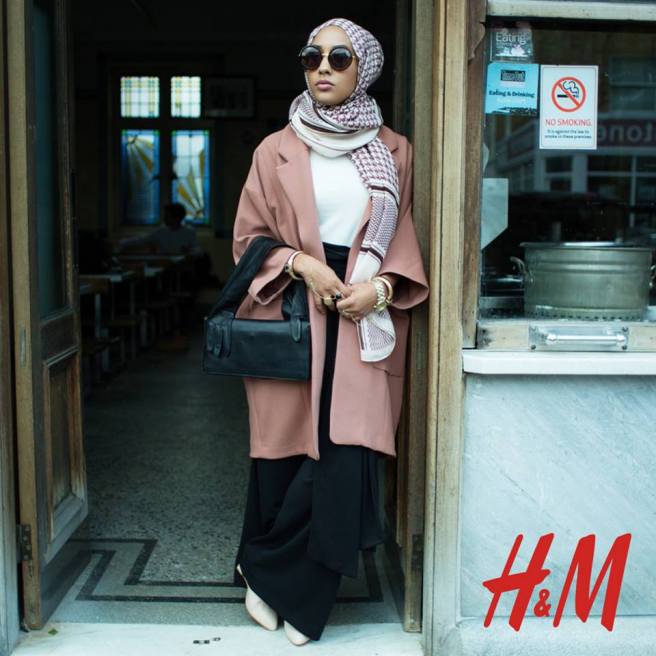
H&M’s ‘Close the Loop’ campaign featuring its first hijab model, Mariah Idrissi. Photograph: Official H&M Facebook

These growing population of women, have in turn carved a way into the fashion industry which now sees this platform as a global trend. High end brands see this as a market opportunity. Dolce & Gabbana launched their first ever collection of abayas and hijabs earlier this year as they seek to cater for the growing demand for Muslim fashion. Uniqlo launched a special collection with Muslim fashion designer Hana Tajima last year, and H&M followed this step by featuring a hijab-wearing model in a recent campaign (The Jakarta Globe, 2016).

OB-UV957_ISLAMI_H_20121005043002
A new breed of designers seeking to blend Islamic modesty with cutting-edge style during Jakarta Fashion Week 2015. Photograph: Achmad Ibrahim

With the help of Indonesia’s annual Jakarta Fashion Week and Indonesia’s Islamic Fashion Fair, together with the developing style of hijab-wearers, Indonesia has set its goal to be the global leader in the Muslim fashion industry by 2020 that is worth nearly $100 billion by some estimates (Our Indonesia, 2015).

Being of both Indonesian and Islamic background, I see the rise of the Muslim Fashion industry being a positive one. However, this rise also sets a fine line between the hijab being a religious symbol representing Islam and its contradictions of being purely a fashion accessory.

Continue reading